Using Lean Thinking to Transform Electric Cargo Brighton's Delivery Operations
How lean principles achieved 94% on-time delivery performance and 15% increased productivity
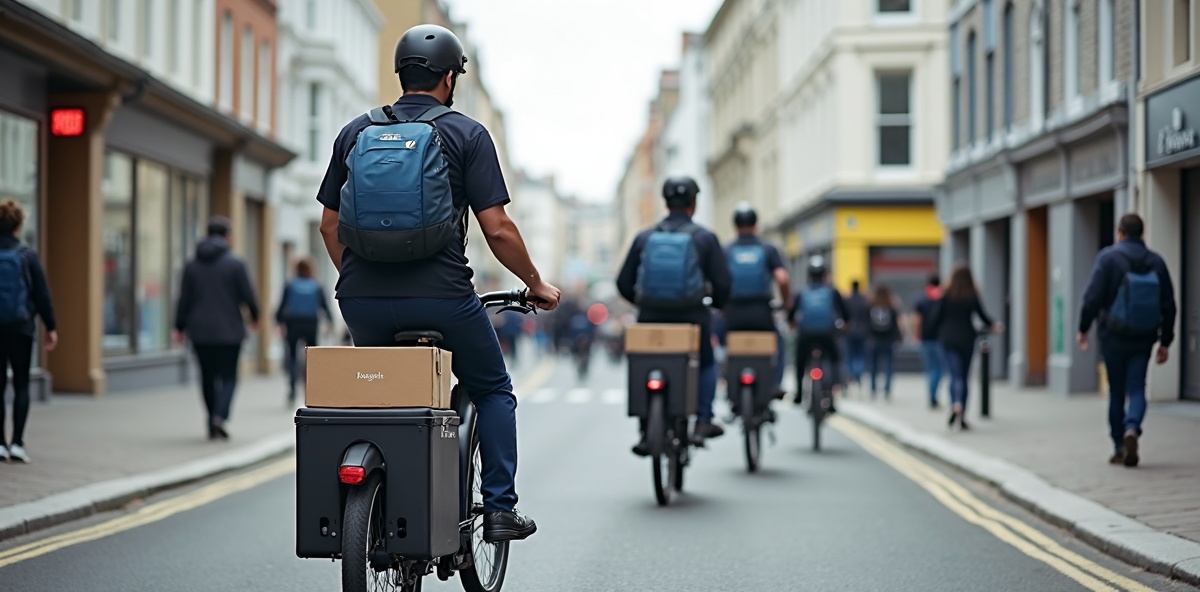
Key Results Achieved
Background
Electric Cargo Brighton is a growing electric bicycle cargo delivery team operating across the city. Positioned as a sustainable alternative to vans, the business had strong values, motivated riders, and increasing demand from local retailers and organisations.
However, despite its environmental credentials and market interest, operational performance was inconsistent. Delivery times varied, rider morale fluctuated, and management found it increasingly difficult to scale without adding cost or complexity.
The leadership team engaged us to improve speed, reliability, and team engagement — while preserving the culture that made the business successful.
The Challenge
Through observation, rider interviews, and data review, we identified several core issues:
- •Unclear ownership of performance across shifts
- •Inconsistent delivery times, even on repeat routes
- •Low visibility of daily progress for riders and supervisors
- •A strong informal culture, but limited structure to support growth
- •Improvement ideas raised regularly, but rarely embedded
Initial Performance Metrics:
Our Lean Approach
Rather than introducing heavy systems or top-down controls, we applied lean principles suited to a fast-moving, people-centric environment:
Focus on flow, not utilisation
Make performance visible and shared
Encourage rapid experimentation and learning
Build improvement into the daily work
Riders and supervisors co-designed the changes, ensuring ownership and rapid adoption.
The Solution
Creating Two Delivery Teams
Riders were split into two balanced teams, each covering comparable routes, volumes, and time windows.
This created:
- Clear team ownership of outcomes
- Shared accountability across shifts
- A natural baseline for comparison
The structure was deliberately framed as a game, not a management control.
Friendly Competition, Not Pressure
Using a small set of daily measures — on-time deliveries, completed routes, and customer issues — teams could see how they were performing in real time.
The focus was on:
- Friendly rivalry, not individual blame
- Learning from the other team's practices
- Short feedback loops
This reinforced lean principles of visibility and continuous improvement.
Faster Deliveries Through Flow Improvements
As teams compared approaches, practical improvements emerged quickly:
- More consistent route sequencing
- Standardised loading and departure routines
- Clearer handovers between shifts
Within four weeks:
- Average delivery lead time reduced by 18%
- Variability between similar routes dropped by over 40%
- Missed or late deliveries decreased significantly
All achieved without additional riders or equipment.
Uniforms and Team Identity
Simple, consistent team uniforms were introduced.
This led to:
- Stronger team cohesion
- Clearer identification for customers and partners
- A more professional on-street presence
Customer feedback mentioning "professionalism" and "reliability" increased by 25% within one month.
"Playing the Game" of Continuous Improvement
Instead of periodic improvement initiatives, teams adopted short, regular check-ins focused on:
- What helped flow today?
- What caused delays?
- What should we try tomorrow?
This created a sustainable improvement rhythm with minimal management overhead.
Results
After eight weeks, Electric Cargo Brighton achieved:
These gains were sustained through peak demand periods, demonstrating that the changes were embedded rather than temporary fixes.
Why It Worked
This engagement succeeded because we:
Applied lean techniques pragmatically, not dogmatically
Designed solutions that matched Electric Cargo Brighton's culture
Focused on behaviour, flow, and visibility, not bureaucracy
Turned operational improvement into something teams wanted to participate in
The result was a delivery operation that behaved like a high-performing system, not a collection of individuals working harder.
How We Help
We help organisations design simple, human-centred operating models that deliver measurable improvements quickly and sustainably.
If you are looking to scale operations, improve reliability, or unlock the full potential of your teams, lean thinking — applied well — delivers results.
Ready to Transform Your Operations?
Discover how lean principles can help your business achieve sustainable growth and operational excellence.